First, some context.
Did you know that by 2030, airline bookings will cease to exist as we know?
The airline industry is undergoing a significant technological transformation in its distribution and booking management systems. Key concepts dominate this landscape: the traditional Passenger Name Record (PNR) and IATA’s innovative One Order initiative. Each represents a different stage in the evolution toward more modern and efficient airline distribution.
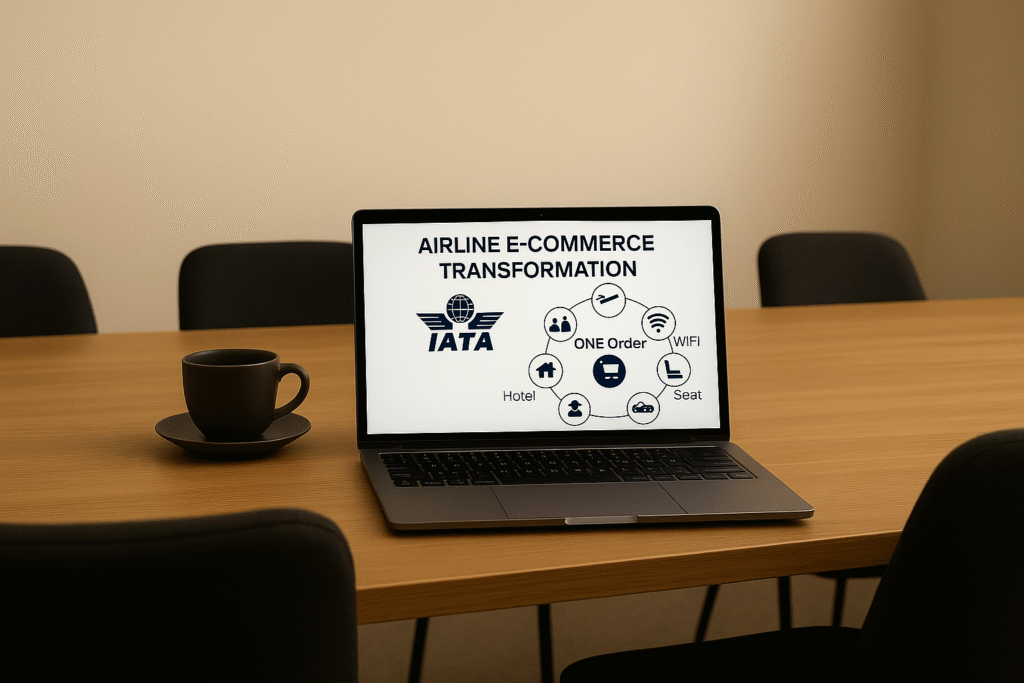
One Order was introduced by IATA in 2015 and, following several tests and certifications, began gaining momentum starting in 2021. While there is no official, industry-wide mandatory date, IATA and the Airline Retailing Consortium are promoting its gradual adoption.
The full transition to One Order is considered a long-term initiative, potentially reaching mass adoption and ultimately replacing legacy systems (such as PNR and e-tickets) by around 2030.
Currently (2025), only a few pioneering airlines, such as Lufthansa, China Southern, and Singapore Airlines, are certified and operating with One Order. Mandatory implementation will depend on regulations and industry adoption, but the target date for it to become standard is by the end of this decade, aligned with the comprehensive modernization of air distribution based on NDC and digital retailing.
Differences between PNR and One Order (Summary Table)
| PNR (Passenger Name Record) | One Order | Advantages of One Order | |
| Definition | Traditional system that stores multiple independent records for reservations, tickets, and electronic documents. | Integrated single record that consolidates reservations, tickets, and other documents into a single, customer-centric order. | Simplify management with a single record instead of multiple, reducing errors and conflicts. |
| Technology | Main use of EDIFACT, without a modern universal format. | XML based on IATA standards, integrated with NDC. | Modern technologies that allow for better integration and flexibility with current and future systems. |
| Data structure | Multiple separate records (PNR, e-ticket, EMD). | Single registry with all information integrated. | Elimination of duplication and complexity in data updates. |
| Operational complexity | High costs and time due to reconciliation between multiple records. | Operational simplification by eliminating costly reconciliations and redundant processes. | Reduces operating costs and management times, improving efficiency. |
| Customer experience | Multiple references/documents that can cause confusion. | Unique reference number that improves the customer experience and simplifies processes such as check-in. | Improve the experience by having a single point of reference and simplification for the passenger. |
| Implementation | Widely implemented system and currently dominant standard. | In the initial phase, but with progressive pilots and certifications. | Modernization necessary to adapt to the industry’s new digital and retail requirements. |
| Key benefits | Stability, universal compatibility, extensive industry knowledge. | Cost reduction, improved customer experience, process simplification, and broad integration with NDC. | Adaptation to current needs for customization, differentiation, and operational efficiency. |
| Challenges | Technical limitations, data fragmentation, privacy and compliance issues. | Requires significant investment, NDC adoption dependency, and organizational change. | Although the transition requires effort, the medium and long term benefits justify the investment. |
| Main users | Airlines, travel agencies, GDS, governments. | Airlines, Travel Sellers, Service Providers, Passengers. | Expand your user base and optimize services for a modern, collaborative ecosystem. |
How will One Order affect airline direct channels (ecommerce)?
One Order will profoundly transform airline e-commerce, impacting both the technical architecture and customer experience, internal operations, and customization capabilities:
- Transformation of the Online Shopping Experience: One Order will transform airline websites into modern retail platforms similar to traditional e-commerce, where passengers can purchase all components of their trip (flights, ancillary services, hotels, destination activities) in a single transaction and unified shopping cart. This transformation will eliminate the need for multiple bookings and separate payments, dramatically simplifying the online purchasing process. Therefore, we will see enormous growth in the sale of third-party ancillary items during the PNR purchase and post-purchase processes.
- Unified Order and Data Management: Airline e-commerce companies will move from managing multiple fragmented records (PNR, e-ticket, EMD) to a single order management system (OMS) that consolidates all customer information into a single record. This will enable real-time updates, better order status tracking, and a complete view of the customer journey from booking to service delivery.
- Advanced Personalization and Dynamic Pricing: One Order, integrated with NDC, will allow airlines to implement more sophisticated dynamic pricing strategies on their websites, offering personalized offers based on traveler profiles, purchase history, and real-time demand. Ecommerce businesses will be able to display dynamic bundled packages and cross-promotions similar to Amazon or modern retail platforms.
- Simplified operations and Costs Reduction: Airlines will experience significant reductions in operating costs by eliminating manual reconciliation processes between multiple systems, automating revenue accounting, and simplifying inventory management. This translates into more efficient websites with faster response times and reduced technical complexity.
- Greater Technological Flexibility and Scalability: Airline e-commerce companies will be able to leverage existing retail technologies and off-the-shelf OMS solutions instead of relying exclusively on expensive, proprietary PSS systems. This will facilitate faster integrations with third parties, implementation of new features, and adaptation to market changes.
- Implementation Challenges for Ecommerce: The transition requires substantial investments in new technology infrastructure, including Order Management Systems, NDC APIs, and modernized web interfaces. Airlines will need to maintain hybrid systems during the transition to ensure compatibility with non-compliant partners.
In short, One Order will revolutionize airborne e-commerce by transforming it into truly modern retail platforms with unified shopping experiences, advanced personalization, and more efficient operations, but it requires strategic planning and significant investment for successful implementation.
Conclusions
The transition from traditional PNRs to One Order represents a transformative milestone in the airline industry, ushering in an era of efficiency, personalization, and operational simplification that will eliminate the legacy inefficiencies of fragmented systems.
With benefits such as cost reduction, a more seamless customer experience, and seamless integration with modern standards like NDC, One Order will not only streamline distribution and retail processes but also position airlines and travel agencies to compete in an increasingly demanding digital marketplace.
However, we know that this evolution requires huge investments in technology and training, and today, we see it as unfeasible for the entire industry to be on One Order by 2030. This type of initiative, applied to other industries such as banking, is a true reflection of how large corporations and their bureaucracy will ensure that, even if One Order is implemented, it will be slower than expected.
On the other hand, for interline agreements, both airlines must be in One Order, which poses a huge synchronization challenge. IATA is working on a model called the “Future of Interline” that simplifies agreements via NDC, but it doesn’t solve the root problem.
—
For service companies like yours, adapting to these changes is key to staying competitive and offering innovative customer experiences. At Consumer Services Hub, as a specialized digital consulting agency, we help you navigate this transformation: from assessing your current infrastructure to designing customized strategies to integrate One Order into your e-commerce processes. Contact us to prepare your business for the future of travel and maximize your growth opportunities!
Bibliography
Official IATA Sources and Documentation
Primary IATA Resources:
-
https://www.iata.org/en/programs/airline-distribution/retailing/one-order/ – Main IATA One Order program page
-
https://developer.iata.org/en/one-order/ – IATA Developer Portal for One Order
-
https://www.iata.org/contentassets/72cbd60393ff42b5975d90ce9e049a7d/oneorder-resolution-797.pdf – Official IATA Resolution 797 (One Order standard)
-
https://www.iata.org/contentassets/72cbd60393ff42b5975d90ce9e049a7d/one-order-transition-study.pdf – IATA One Order Transition Study
-
https://www.iata.org/contentassets/72cbd60393ff42b5975d90ce9e049a7d/fulfilment-with-orders-one-order-pilots_final.pdf – One Order Pilots Report
-
https://developer.iata.org/en/ndc/ – IATA NDC Developer Portal
-
https://developer.iata.org/en/ – Main IATA Developer Portal
Implementation Guides:
-
https://guides.developer.iata.org/docs/19-1_ImplementationGuide.pdf – One Order Implementation Guide 19.1
-
https://guides.developer.iata.org/docs/21-1_ImplementationGuide.pdf – Implementation Guide 21.1
-
https://guides.developer.iata.org/docs/21-3_ImplementationGuide.pdf – Implementation Guide 21.3
Industry Analysis and Expert Sources
Consulting and Analysis:
-
https://www.altexsoft.com/blog/iata-one-order-for-the-airlines/ – Comprehensive One Order analysis by AltexSoft
-
https://www.sia-partners.com/en/insights/publications/how-will-iata-bring-airline-order-management-processes-digital-era – Sia Partners analysis on One Order
-
https://www.rolandberger.com/en/Insights/Publications/How-airlines-can-unleash-the-transformative-power-of-ONE-Order.html – Roland Berger strategic analysis
Industry Publications:
-
https://www.linkedin.com/pulse/future-airline-distribution-impact-iatas-one-order-initiative-dasu – Future of Airline Distribution analysis
-
https://amadeus.com/en/blog/articles/five-things-about-one-order – Amadeus insights on One Order
Airline Implementation Case Studies
Lufthansa (First Certified Airline):
-
https://www.futuretravelexperience.com/2019/05/lufthansa-first-airline-iata-one-order-certification/ – Lufthansa becomes first certified airline
-
https://www.businesstravelnews.com/Technology/Lufthansa-Becomes-First-Airline-to-Achieve-One-Order-Certification – Business travel news coverage
-
https://www.lhsystems.com/solutions/commercial-financial/ndc-one-order – Lufthansa Systems One Order solutions
Singapore Airlines:
-
https://amadeus.com/en/resources/case-study/the-ndc-and-one-order-pilot-with-singapore-airlines-that-underpins-the-future-of-interlining – Singapore Airlines One Order pilot case study.
Technology Provider Resources
System Providers:
-
https://start.webcore.ws/industries/ndc – Webcore NDC and One Order platform
-
https://www.iso-gruppe.com/en/business-units/tourism/technologies/ndc-and-one-order – ISO Group NDC & One Order solutions
-
https://w3.accelya.com/resources/blogs/road-to-retailing-excellence-one-order-and-order-management/ – Accelya Order Management insights
White Papers and Research:
-
https://hexaware.com/wp-content/uploads/2020/05/WhitePaper_OneOrder.pdf – Hexaware One Order white paper
-
https://amadeus.com/documents/resources/white-paper/Amadeus%20Report_Empowering%20Travel%20Sellers.pdf – Amadeus white paper on modern travel retailing
Technical and Implementation Resources
-
https://www.altexsoft.com/blog/order-management-system-airline-retailing/ – Order Management Systems in airline retailing
-
https://www.altexsoft.com/glossary/one-order/ – One Order technical glossary