It’s very common for your Booking Flow, manage my booking, and online check-in to fall short of the conversion rate and average ticket value you expect. You might not know why, and nobody gives you a clear answer about what’s really happening. In this article, I’ll share key tips to identify problems easily using data you most likely already have, and avoid lose more money in your airline´s direct channel.
A story

A few years ago, we launched a new CMS for an airline, a complex project due to the many variables and sales points (countries) involved. Rolling out this new content manager, with a completely different provider, was a challenge in terms of launch, operations and QA.
After going live and even achieving a higher conversion rate than before, nobody (except the project director) noticed we were losing about 30% of sales in one of our main markets. Days later, it turned out that the issue was that in this market, a significant portion of users were browsing with Internet Explorer 11, since corporate computers typically used it by default.
No matter how carefully we roll out features with feature flags and gradual scaling—if you lose sales at a key point of sale, you’re still losing money.
What we learned
Beyond reviewing general metrics, you must dig deeper to ensure everything works as it should. Funnels shouldn’t only be measured at the surface level—they need to be analyzed across different dimensions for proper visibility.
Launching with feature flags, gray scaling, or through AB testing allows you to go live without major risks. While these practices help you transition safely, even knowing you could be making more revenue they provide a valuable safety net.
How to identify what needs to be fixed in your funnel in 3 steps
- Make Sure You’re Measuring Correctly: If you have ways to compare your product analytics tool with your data warehouse, this helps you understand how accurate your analytics really are.
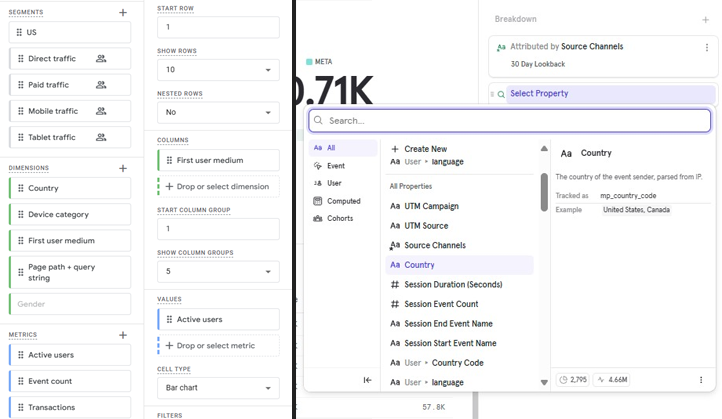
- Dive Deep into Dimensions: Nearly all analytics tools let you break down or filter by dimensions. The ones I always recommend are:
- POS (Point of Sale): Keep in mind this is very different from geolocation—don’t confuse the two.
- Device: Mobile devices typically generate more traffic than desktop but convert less. Also, long-haul flights (with higher average ticket value) tend to convert at even lower rates.
- Traffic Source: More traffic doesn’t always mean more sales. Today, each visit has a high acquisition cost, so they aim to attract only the highest quality traffic. A visitor from social traffic at the first step of the buying process is not the same as one from a metasearch engine.
- Compare Before and After Using Comparable Timeframes: Look for similar seasonal periods; identify what’s different and why.
Conclusions
This is a task that takes time, focus, and details. Understanding user behavior in a purchase flow is complex, but with the right tools and process, you can greatly improve both average PNR and Look to Book.
If you want help discovering where you’re losing money in your airline sales flows, reach out to us at Consumer Services Hub or write directly to hi@consumerserviceshub.com.