The future of travel industry e-commerce: Amazonification
The travel industry is undergoing a fundamental shift toward retail-like e-commerce experiences. Amazon-style personalization and data-driven recommendations are reshaping expectations.
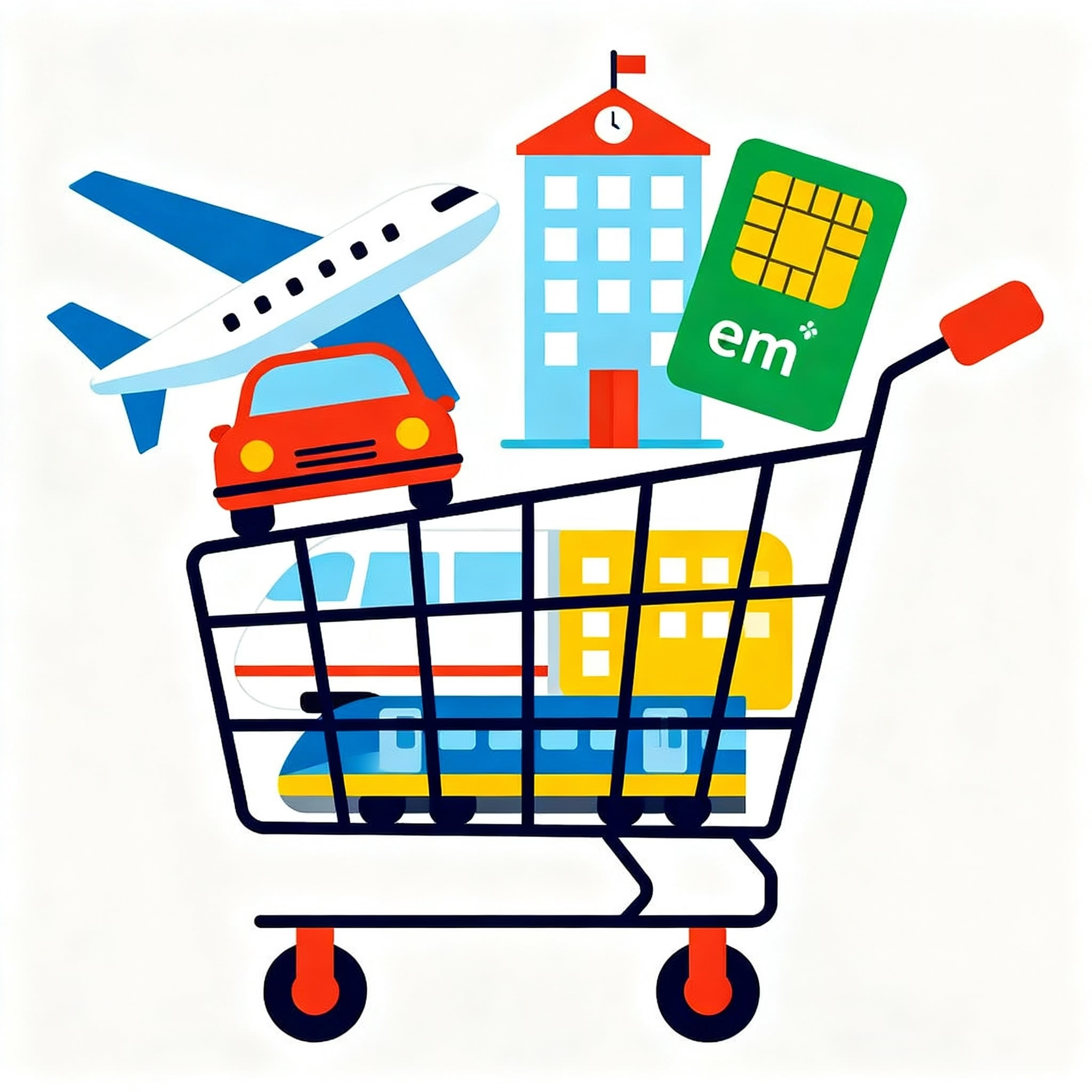
The Amazon effect on travel
The travel industry is undergoing a fundamental shift. Travelers increasingly expect Amazon-like experiences: personalized recommendations, one-click purchasing, seamless returns, and proactive customer service.
This 'Amazonification' of travel means airlines, hotels, and service companies must think beyond traditional booking flows and embrace true retail thinking.
The gap between what consumers experience on Amazon and what they experience on most travel websites is enormous — and that gap represents both a challenge and an opportunity.
The comparison isn't abstract. A traveler who bought a suitcase on Amazon last week saw a saved address, a saved card, a delivery estimate before checkout, and a return label generated automatically when the item didn't fit. The same traveler booking a flight an hour later is often asked to re-enter passport details already on file, gets no visibility into what a seat change will cost until deep into a call with support, and has no single place to see the full trip — flight, transfer, hotel — as one order. Travelers don't compare airlines to airlines anymore; they compare every purchase experience to the best one they had that week, regardless of industry.
What Amazonification means for airlines
For airlines specifically, this means rethinking the entire purchase journey: from inspiration to booking to post-travel engagement. It means personalized pricing, dynamic bundling, and frictionless checkout.
Airlines that embrace retail thinking see measurably better results: higher conversion rates, increased ancillary revenue, and stronger customer loyalty.
Concretely, this shows up in three places. First, offer construction: instead of a single fare plus a static list of add-ons, the airline assembles a bundle — seat, bag, lounge, insurance — based on who the traveler is and what similar travelers have valued. Second, checkout: one-click repeat purchase for known travelers, saved payment methods, and no forced account creation. Third, after the sale: proactive rebooking when a flight changes, instead of making the traveler discover it and call in.
The key is shifting from a transactional mindset ('sell a seat') to a relationship mindset ('serve a traveler'). That shift is organizational as much as technical — it touches how offers are priced, how customer data is shared between booking and service teams, and how success is measured beyond the initial sale.
Where to start
Retailers didn't get to one-click checkout overnight, and airlines and hotels don't need to match Amazon feature-for-feature to close most of the gap. The highest-leverage starting points are usually the most mundane: recognising a returning customer automatically, removing re-entry of information the company already has, and making post-purchase changes self-service instead of call-only. Those three alone tend to close a large share of the experience gap before any advanced personalization work begins.

Written by
Rodrigo Maroto
Founder of Consumer Services Hub. Consultant and strategist with 15+ years of experience in ecommerce, digital product management, and consumer services.
View LinkedIn profileReview your direct channel strategy
A focused session to pressure-test your ecommerce roadmap and priorities.
Book a strategy sessionWhether you're launching a new digital channel, optimizing an existing one, or unlocking the next stage of growth — we're ready to help.
Related articles

The travel booking journey is broken, and it costs us all
Every second, somewhere in the world, a traveller abandons a flight booking. Airlines face an 87.8% cart abandonment rate: here is why it happens.
How to organise a high-performing ecommerce team
High performance depends more on ownership, decision rights and cadence than on a perfect organisation chart. Two teams can share the same org chart and still be unable to ship anything together.
How to build a business case for direct-channel transformation
A defensible business case shows current economics, the counterfactual and a range of outcomes rather than one optimistic number. A single number invites a single objection; a range survives the room.