The channel is not the product: when distribution is the key
In the service industry, the temptation to treat the digital channel as the product itself is common. But the channel is just a vehicle — and confusing the two leads to strategic misalignment.
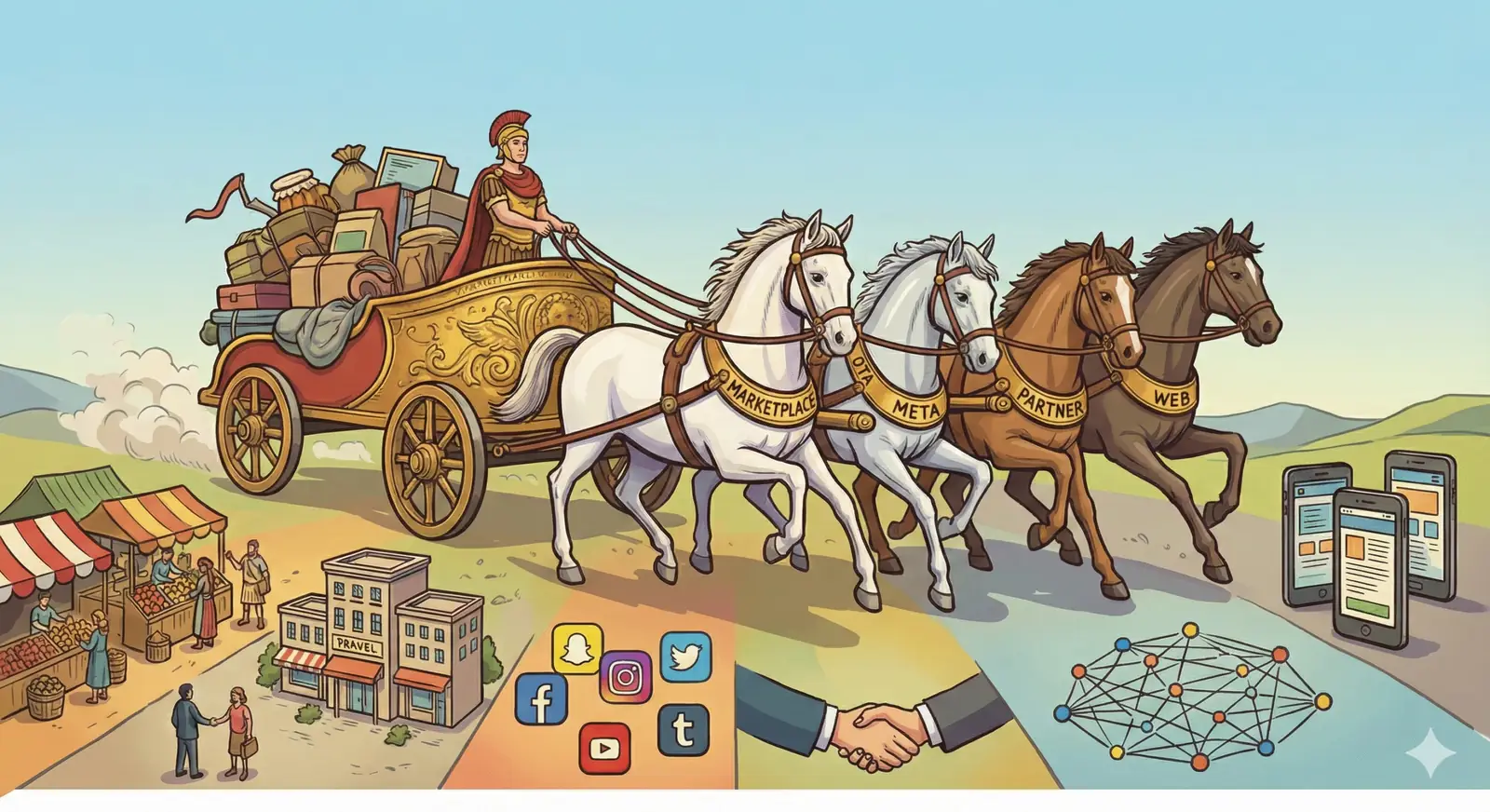
Distribution vs. Product
In the service industry, the temptation to treat the digital channel as the product itself is common. But the channel is just a vehicle — and confusing the two leads to strategic misalignment.
When companies focus too much on the channel (the website, the app, the booking engine), they risk losing sight of what truly matters: the service itself, the value proposition, and the customer experience.
The digital channel should amplify, not replace, the core product strategy. A beautifully designed website won't fix a broken service — but a strong service with smart distribution will always outperform.
We've seen this play out repeatedly: a hotel group redesigns its booking engine, conversion ticks up for a quarter, and then flattens because the underlying product — room availability, rate competitiveness, the actual guest experience — never changed. The channel gave the same product a shinier wrapper; it didn't make the product better.
Why distribution matters more than ever
In today's landscape, distribution strategy determines market reach and profitability. Companies need to balance direct and indirect channels, optimize each touchpoint, and ensure consistent messaging across all distribution points.
The most successful companies we've worked with treat distribution as a strategic capability, not just a technical function. They invest in understanding which channels drive the most value and optimize accordingly.
Consider two airlines with an identical fare and route network. One only sells through GDS and OTAs; the other has invested in a direct channel with NDC-based offers, its own loyalty data, and a service team that can act on that data post-booking. Over a full year, the second airline captures more repeat business at a lower cost of sale — not because its product is different, but because its distribution lets the product be discovered, trusted, and serviced better.
The key insight: your product is your service. Your channel is how you deliver it. When you get this distinction right, everything else falls into place.
A practical way to tell the two apart
A simple test: if you removed your website or app entirely and replaced it with a phone line and a spreadsheet, would customers still buy the underlying service? If the answer is yes — because the flights are competitively priced, the hotel rooms are genuinely good, the financial product solves a real problem — then you have a strong product and a channel problem, which is usually solvable with UX, speed, and trust signals.
If the answer is no, the channel isn't the bottleneck. No amount of checkout optimization, page-speed work, or personalization will fix a service that customers don't actually want at the price and quality being offered. Diagnosing which situation you're in should come before any distribution investment, not after.

Written by
Rodrigo Maroto
Founder of Consumer Services Hub. Consultant and strategist with 15+ years of experience in ecommerce, digital product management, and consumer services.
View LinkedIn profileReview your direct channel strategy
A focused session to pressure-test your ecommerce roadmap and priorities.
Book a strategy sessionWhether you're launching a new digital channel, optimizing an existing one, or unlocking the next stage of growth — we're ready to help.
Related articles
How to build a business case for direct-channel transformation
A defensible business case shows current economics, the counterfactual and a range of outcomes rather than one optimistic number. A single number invites a single objection; a range survives the room.
The direct channel business case to present to the board
The board does not approve a channel strategy: it approves a capital allocation with declared risk. A case that only promises to grow the direct channel without saying at whose expense reads as a preference, not an investment.
How to audit a direct sales channel step by step
A good audit reconstructs the economics and the complete customer journey rather than producing a list of issues. What matters is whether the findings change a decision, not how many issues the audit surfaces.