CRO for service businesses: why it differs from retail
Service CRO must optimise a decision under uncertainty and a promise that will be fulfilled after purchase. Testing earns its keep only when it changes how customers decide, not when it produces a longer backlog of experiments.
Written for: Ecommerce, CRO, analytics, CRM, data, personalisation and digital product leaders.
Service CRO must optimise a decision under uncertainty and a promise that will be fulfilled after purchase.
The business problem behind the topic
Applying retail playbooks to a complex service often creates local improvements that do not solve the complete decision. In travel, finance or subscriptions, availability, risk, conditions, trust and future delivery matter as much as the interface. In service businesses, the decision does not end when a customer clicks “buy”: the digital promise must connect with operations, service delivery, data and profitability. This is why the topic should be treated as a business decision rather than an isolated marketing or technology enhancement.
The dimensions that need to be resolved
A sound approach combines four dimensions. Reviewing them separately helps expose friction; managing them as a system allows the direct channel to grow without transferring complexity to customers or the organization.
1. Nature of the decision
Customers are not evaluating only a visible product: they compare rules, scenarios, perceived risk and future consequences. Research should identify the uncertainties blocking decisions and the evidence that resolves them. The starting point is a concrete decision: which signal will be used, for whom, with which action and which outcome should change. Collecting more data does not replace this definition.
2. Availability, price and eligibility
The funnel depends on inventory, dates, profiles, credit, coverage or restrictions. Separate lack of intent from the real inability to buy so that every drop is not attributed to experience. The signal needs quality, identity, consent, freshness and a fallback when confidence is insufficient. Without these conditions, automation amplifies errors.
3. Trust and comprehension
Terms, cancellation, payments, privacy, support and social proof reduce risk. Optimisation should improve clarity without hiding complexity or creating promises operations cannot fulfil. Instrumentation should record exposure, response, outcome and guardrails. Only then can the organisation distinguish correlation, attribution and incremental effect.
4. Post-sale and economic value
A conversion lift may increase cancellations, fraud, calls or servicing cost. Outcomes should be measured through valid confirmation, use and margin rather than only the final click. The capability requires ownership, data contracts, QA, monitoring and a learning cadence. Without operations, the use case degrades after launch.
A practical roadmap
Sequence matters. Starting with a tool or a feature list usually creates an expensive project that is difficult to govern. The following roadmap forces the business decisions first and the implementation second.
1. Define valid conversion. Agree which event represents value and which cancellations, rejections or incidents should be excluded.
2. Research uncertainty. Combine data, interviews, sessions and assisted contact to understand why customers hesitate.
3. Map system constraints. Separate proposition, information, inventory, rules, payment and operational problems.
4. Design end-to-end experiments. Test changes with behavioural hypotheses and operational guardrails.
5. Scale learning. Turn results into reusable patterns across journeys, markets and products.
How to measure whether it works
A useful dashboard does not accumulate indicators: it connects behaviour, economics and execution. Metrics should be reviewed by segment, device, market and journey stage so that averages do not hide the actual problem.
Valid conversion: Confirmed transactions that meet economic and service rules.
Availability or eligibility rate: Demand receiving an option that can actually be purchased.
Understanding of terms: Users correctly identifying price, coverage, flexibility and obligations.
Post-sale servicing cost: Contact, changes, cancellations and exceptions per sale.
Incremental margin: Additional value attributable to the change after all variable costs.
Common mistakes that reduce impact
Copying product-page patterns without considering service complexity.
Optimising the last step when the issue starts with availability or proposition.
Celebrating gross conversion while ignoring cancellations, fraud and support cost.
Removing essential information to make the screen look simpler.
The warning sign is simple: if the project can be described only by the name of a platform, a campaign or a redesign, it is probably not yet sufficiently connected to the business outcome.
Conclusion
Service CRO requires a broader view than transactional retail. The best experience does not remove every decision; it makes a complex decision understandable and then delivers exactly what was promised.
Consumer Services Hub designs measurement, CRO and personalisation programmes connected to business outcomes and real execution capacity.
Consumer Services Hub - Strategic ecommerce consultancy for B2C service companies
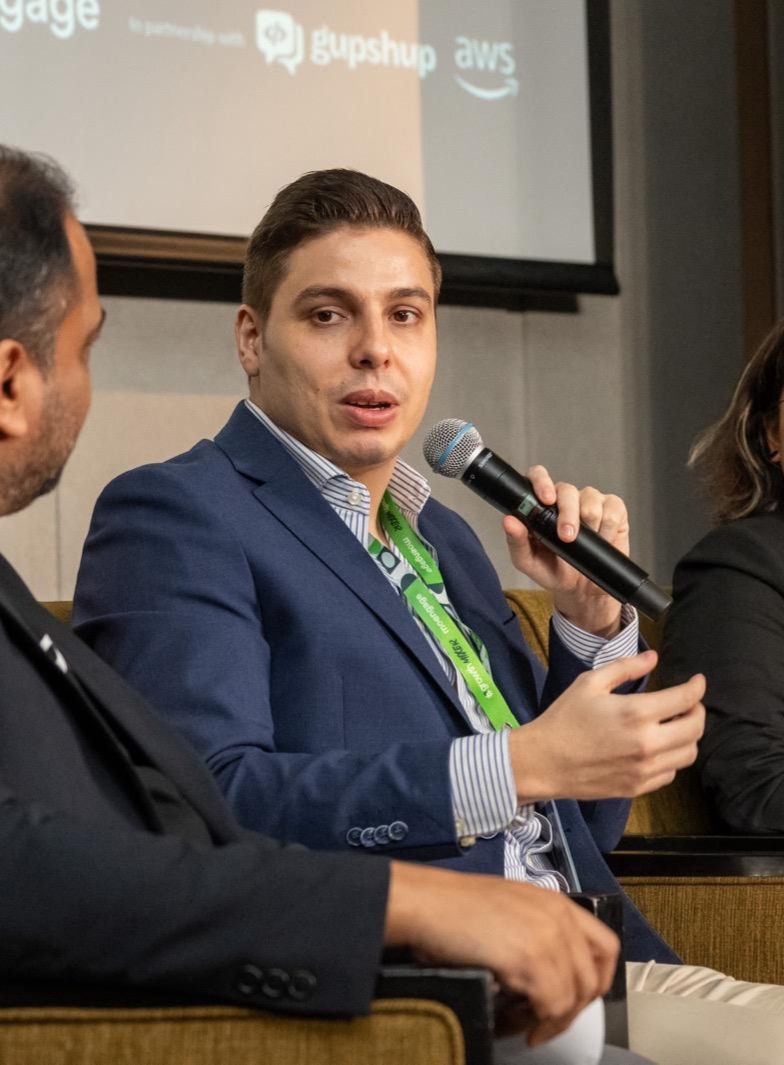
Written by
Rodrigo Maroto
Founder of Consumer Services Hub. Consultant and strategist with 15+ years of experience in ecommerce, digital product management, and consumer services.
View LinkedIn profileBuild a conversion programme
Experimentation and personalisation with governance, not one-off tests.
Talk to usWhether you're launching a new digital channel, optimizing an existing one, or unlocking the next stage of growth — we're ready to help.
Related articles
How to create a single customer view in service businesses
A useful view does not merge everything: it connects entities and events with enough confidence for a specific decision. Forcing a match the data can't support creates a single customer view of the wrong customer.
AI agents in customer service: from distribution to servicing
Automating the answer is easy; automating the resolution requires permissions almost nobody has granted. An assistant that can explain the change policy but cannot change the flight has merely moved the wait one step further along.
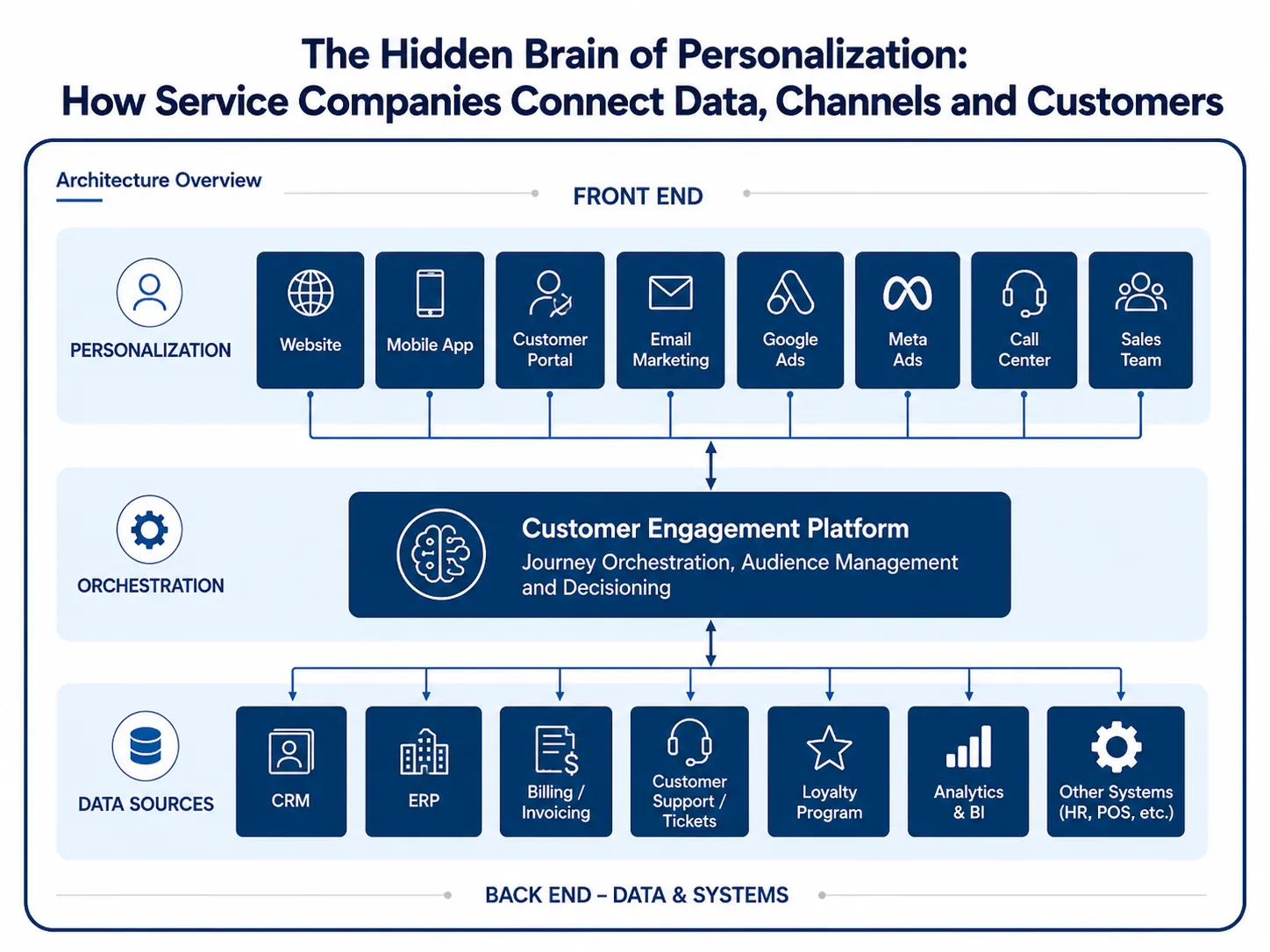
The invisible engine that turns data into sales
How to choose a customer engagement and personalization platform based on the size and maturity of your ecommerce. Companies don't need more campaigns: they need a layer able to turn scattered data into relevant decisions for each customer, in each channel, at the right moment.