Loyalty as a direct channel, not as a cost
A programme justifies itself by the behaviour it changes, not the points it issues. If the member buys the same thing, at the same time, in the same place, the programme is funding behaviour that already existed.
Written for: Leaders in loyalty, commercial, ecommerce, CRM and data within airlines.
A programme justifies itself by the behaviour it changes, not the points it issues.
A valuable asset managed as an accounting obligation
Airline loyalty programmes rank among the most valuable assets in the sector, and yet internally they are discussed in the language of liability: points issued, points redeemed, associated provision. That conversation is necessary, but it explains nothing about the business.
The commercial question is different: what would the member do if the programme did not exist? If the answer is “much the same”, the programme is paying for behaviour it already had. If the answer is “choose another airline, book later, or buy through an intermediary”, the programme is producing value and can be optimised like any other commercial lever.
Four decisions that turn it into a channel
Measure behaviour change, not activity
Programme activity — enrolments, credited transactions, redemptions — describes operation, not contribution. What matters is the difference against a comparable group without the stimulus: more frequency, earlier booking, a higher share of direct bookings. Without that contrast, any figure can be read as success.
Turn recognition into product, not discount
A benefit that consists only of paying less trains the member to wait for a reduction. The benefits that sustain a relationship tend to be operational: flexibility when plans change, priority when something goes wrong, visible recognition at the moment of disruption. They are also cheaper and far harder for a competitor to replicate.
Use the programme as a first-party data source with a genuine exchange
Members share information because they expect something back. If the data collected changes nothing visible to them — not the offer, not the treatment, not the service — the exchange feels one-sided and data quality degrades. Every field requested should be justifiable by a specific decision.
Concentrate the benefit inside the direct channel
If the same benefit is available through any intermediary, the programme is funding third-party distribution. Differentiation does not have to be price: it can be early access, later management, or the ability to change a booking at no cost.
How to reframe it
1. Build the counterfactual. Define a comparison group before evaluating any programme action.
2. Classify benefits by cost and by difficulty of imitation. Favour operational over monetary.
3. Audit the data collected. Remove every field that feeds no decision.
4. Concentrate differential benefits in the direct channel. Start with flexibility and service, not price.
5. Review economics by segment. Separate members whose behaviour changes from those who were already loyal.
Metrics that reveal real contribution
Frequency uplift versus control group: attributable additional flights.
Direct channel share among members: compared with non-members of equivalent profile.
Cost per behaviour changed: associated provision divided by incremental behaviour.
Use of non-monetary benefits: adoption of flexibility, priority and service.
Declared data quality: fields voluntarily completed and kept current.
Signals the programme has become a cost
Annual targets are expressed in enrolments, not behaviour.
The main benefit members perceive is a discount.
The same benefits are offered through intermediaries.
Nobody has ever compared members with an equivalent non-member group.
If the team cannot name a commercial decision that changed because of programme data in the last quarter, the programme is collecting information nobody uses.
Conclusion
A loyalty programme is neither a permanent campaign nor a provision line: it is a channel with its own economics. Treated that way — with a counterfactual, benefits that are hard to imitate and data that changes decisions — it stops being a cost to be justified and becomes a lever to be managed.
Consumer Services Hub helps airlines redesign the economics of loyalty programmes and their role in direct channel growth.
Consumer Services Hub - Strategic ecommerce consultancy for B2C service companies
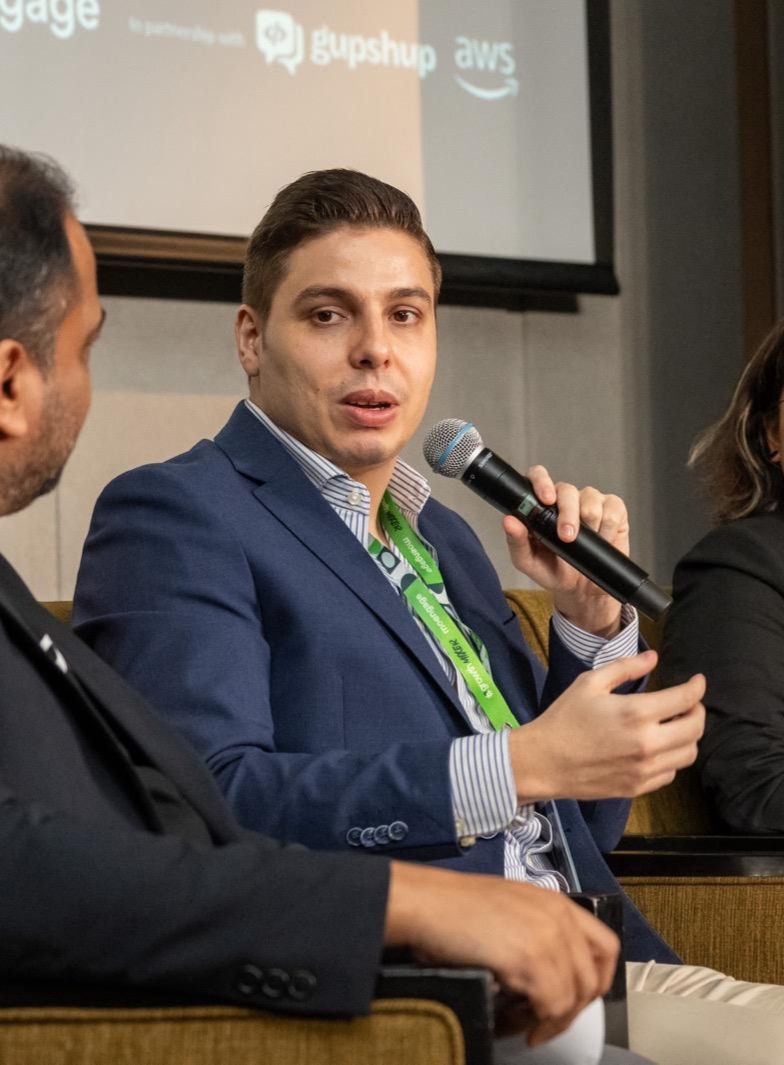
Written by
Rodrigo Maroto
Founder of Consumer Services Hub. Consultant and strategist with 15+ years of experience in ecommerce, digital product management, and consumer services.
View LinkedIn profileGrow airline direct revenue
We audit booking funnels, ancillaries and retailing capabilities end to end.
Talk to usWhether you're launching a new digital channel, optimizing an existing one, or unlocking the next stage of growth — we're ready to help.
Related articles
How to measure the true profitability of an airline direct channel
Direct profitability should be measured as incremental contribution and relationship value, not as the absence of commission. Avoiding a commission is not the same as making money; the two get confused more often than they should.
Fleet modernisation and brand promise in the direct channel
Fleet investment is the commercial argument slowest to reach the point of sale. An airline that renews its cabin while still selling with the same product sheet is paying for the improvement twice and charging for it never.
Sustainability and SAF in the direct channel: communicating it without greenwashing
Sustainability only converts when the passenger understands what they buy, what they get and what they do not. An offset checkbox without verifiable explanation does not sell commitment: it sells doubt.