How to measure the true profitability of an airline direct channel
Direct profitability should be measured as incremental contribution and relationship value, not as the absence of commission. Avoiding a commission is not the same as making money; the two get confused more often than they should.
Written for: Airline ecommerce, distribution, digital product, revenue, technology and customer experience leaders.
Direct profitability should be measured as incremental contribution and relationship value, not as the absence of commission.
The business problem behind the topic
Comparing direct and indirect channels only through distribution fees ignores acquisition, metasearch, payment, fraud, servicing, loyalty, mix and incremental demand. The answer changes by market, route and customer. In service businesses, the decision does not end when a customer clicks “buy”: the digital promise must connect with operations, service delivery, data and profitability. This is why the topic should be treated as a business decision rather than an isolated marketing or technology enhancement.
The dimensions that need to be resolved
A sound approach combines four dimensions. Reviewing them separately helps expose friction; managing them as a system allows the direct channel to grow without transferring complexity to customers or the organization.
1. Comparable revenue and mix
Normalise fare, ancillary, currency, route, timing and passenger mix. Channels attract different profiles and should not be compared through gross averages. Validation should be segmented by market, route, device, travel mission and passenger type. Network averages can hide very specific offer or experience problems.
2. Complete variable costs
Include paid media, metasearch, affiliates, variable technology, payment, fraud, contacts, refunds and disruption. The decision should translate into offers, pricing, content, terms and a recognisable reason to book direct. Passengers need to perceive value before starting checkout.
3. Incrementality and cannibalisation
Estimate which sales the channel adds, which migrate from another channel and which investment would have occurred anyway. Dependencies across the PSS, IBE, Offer and Order, payments, CRM, airport processes and servicing should be mapped. A local improvement can fail when it crosses the rest of the journey.
4. Data and recurrence value
Consider identity, permission, repeat purchase, loyalty and lower future cost with evidence and without inflating intangible benefits. Governance should connect ecommerce, revenue, distribution, product, technology and operations through shared economic metrics. Otherwise, each function pushes the problem to the next stage.
A practical roadmap
Sequence matters. Starting with a tool or a feature list usually creates an expensive project that is difficult to govern. The following roadmap forces the business decisions first and the implementation second.
1. Define contribution per order and passenger. Agree revenue, costs, cancellations and horizon.
2. Allocate costs by driver. Use market, method, campaign, contact and service.
3. Create comparable cohorts. Control route, departure date, fare, customer and timing.
4. Measure incrementality. Use holdouts, geo tests or causal models where possible.
5. Include observed recurrence. Add future value only when evidence exists.
How to measure whether it works
A useful dashboard does not accumulate indicators: it connects behaviour, economics and execution. Metrics should be reviewed by segment, device, market and journey stage so that averages do not hide the actual problem.
Net contribution per passenger: Margin after complete variable costs.
Incremental direct share: Additional share attributable to direct strategy.
Cost to acquire and serve: Acquisition plus payment, contact and fulfilment.
Repeat-direct rate: Customers returning and booking direct.
Channel value variance: Controlled difference by market, route and segment.
Common mistakes that reduce impact
Using avoided commission as net benefit.
Attributing pre-existing brand demand to direct marketing.
Ignoring customer care or irregular-operations cost.
Applying one global result to every market and route.
The warning sign is simple: if the project can be described only by the name of a platform, a campaign or a redesign, it is probably not yet sufficiently connected to the business outcome.
Conclusion
The direct channel is not always cheaper or always more profitable. Its advantage appears when it improves contribution, control, learning and recurrence in segments where the airline can create differentiated value.
Consumer Services Hub helps airlines connect commercial strategy, booking experience, distribution and technology to grow the direct channel.
Consumer Services Hub - Strategic ecommerce consultancy for B2C service companies

Written by
Rodrigo Maroto
Founder of Consumer Services Hub. Consultant and strategist with 15+ years of experience in ecommerce, digital product management, and consumer services.
View LinkedIn profileGrow airline direct revenue
We audit booking funnels, ancillaries and retailing capabilities end to end.
Talk to usWhether you're launching a new digital channel, optimizing an existing one, or unlocking the next stage of growth — we're ready to help.
Related articles
Fleet modernisation and brand promise in the direct channel
Fleet investment is the commercial argument slowest to reach the point of sale. An airline that renews its cabin while still selling with the same product sheet is paying for the improvement twice and charging for it never.
Loyalty as a direct channel, not as a cost
A programme justifies itself by the behaviour it changes, not the points it issues. If the member buys the same thing, at the same time, in the same place, the programme is funding behaviour that already existed.
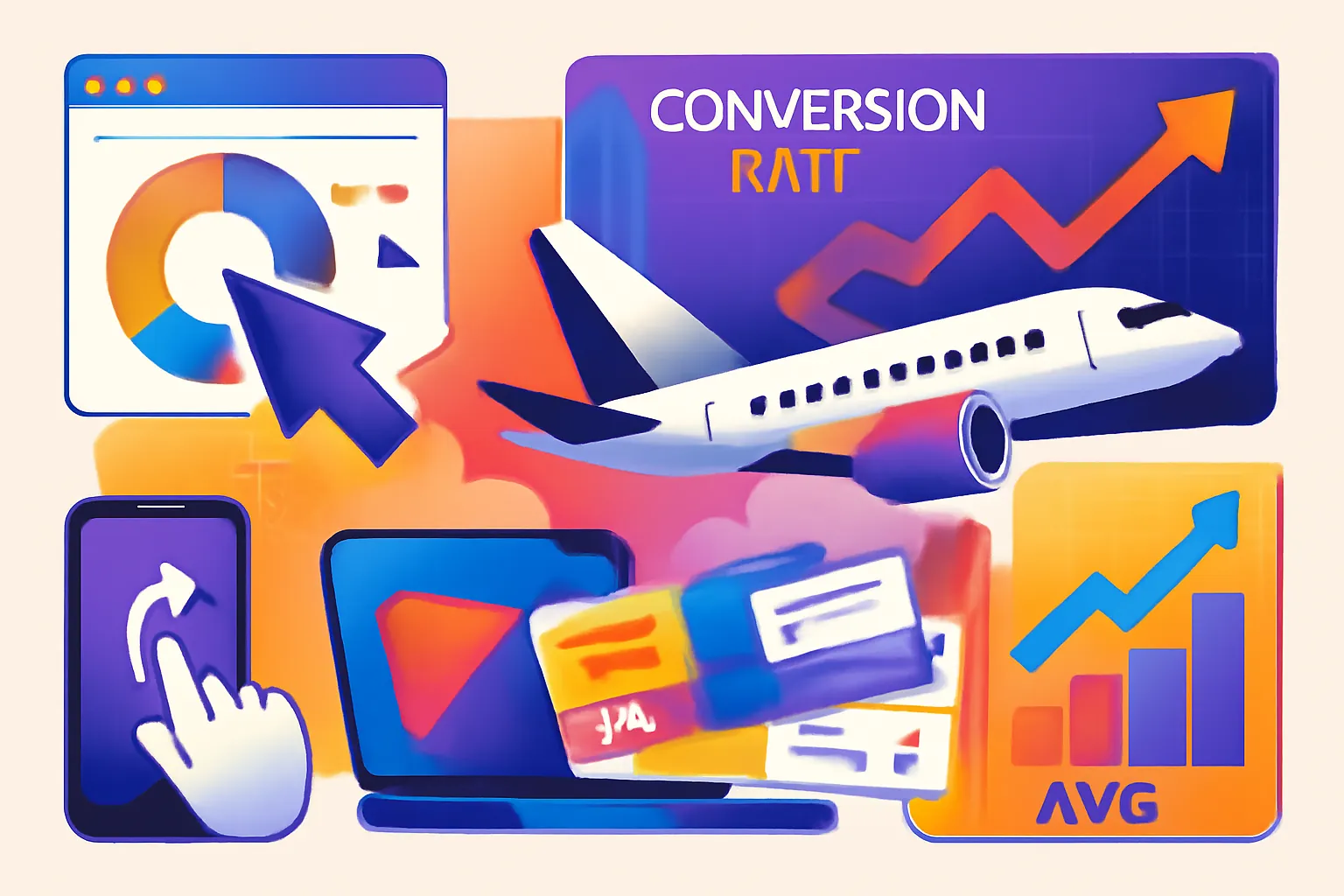
2026 Strategy: Maximize Your Profitability by Optimizing Airline Direct Channels
Airlines must refocus on direct channel optimisation to maximise profitability. A practical 2026 strategy framework for commercial and digital leaders.