2026 Strategy: Maximize Your Profitability by Optimizing Airline Direct Channels
Airlines must refocus on direct channel optimisation to maximise profitability. A practical 2026 strategy framework for commercial and digital leaders.
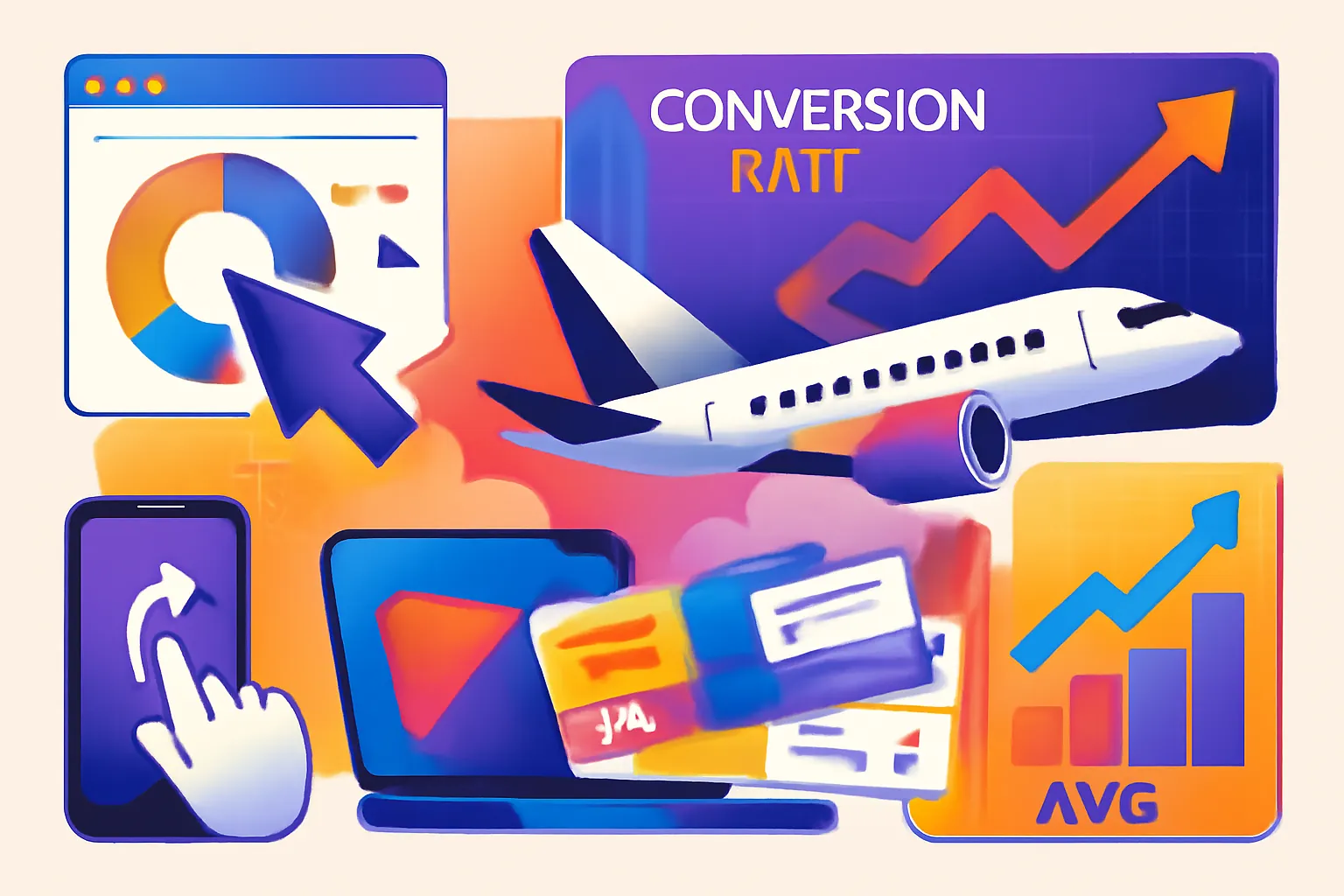
Strategic planning for 2026
Airlines face a critical inflection point in their digital strategies. The companies that invest now in direct channel optimization will thrive.
The foundation must include: clear assessment of current channel performance, identification of revenue leakage points, and a phased approach to improvement.
Key priorities: data infrastructure modernization, customer experience optimization, payment method diversification, and organizational alignment.
In practice, this planning exercise usually starts with a channel P&L that most airlines don't have in one place: cost of sale by channel (GDS fees, OTA commissions, direct-channel technology and payment costs), conversion by channel, and repeat-purchase rate by channel. Without that baseline, '2026 strategy' tends to default to a list of features — a new app, a loyalty redesign — rather than a plan tied to where the money is actually leaking.
The profitability equation
Direct channel profitability comes from three levers: reducing distribution costs, increasing conversion rates, and growing ancillary revenue.
A coordinated approach can yield 15-25% improvement in direct channel profitability within 12-18 months.
The most common mistake is treating these as isolated initiatives. They must be part of an integrated strategy.
For example, an airline that runs an ancillary-revenue push (bundling seats and bags more aggressively) without also fixing checkout friction often finds the bundles simply raise the price shown at the point customers already abandon — conversion drops enough to offset the ancillary gain. The three levers move together: distribution cost reduction funds the investment, conversion work protects volume, and ancillary growth captures the margin once the funnel is no longer leaking.
Sequencing the work
Not all three levers can be tackled at once with the same team. A workable sequence for most mid-sized airlines: first, fix measurement and the highest-friction steps in checkout (typically payment methods and mobile performance) since these have the fastest payback and the least organizational complexity. Second, renegotiate or rebalance distribution mix once direct-channel conversion is credible enough to shift volume toward it. Third, build out ancillary and bundling once the base funnel is stable enough that added complexity doesn't reintroduce abandonment.
Airlines that skip straight to step three — often because ancillary revenue is the most visible and easiest to sell internally — tend to see initial gains erode within two or three quarters as the underlying friction resurfaces.

Written by
Rodrigo Maroto
Founder of Consumer Services Hub. Consultant and strategist with 15+ years of experience in ecommerce, digital product management, and consumer services.
View LinkedIn profileGrow airline direct revenue
We audit booking funnels, ancillaries and retailing capabilities end to end.
Talk to usWhether you're launching a new digital channel, optimizing an existing one, or unlocking the next stage of growth — we're ready to help.
Related articles
How to measure the true profitability of an airline direct channel
Direct profitability should be measured as incremental contribution and relationship value, not as the absence of commission. Avoiding a commission is not the same as making money; the two get confused more often than they should.
Airline metasearch: managing Google Flights, Skyscanner and Kayak
Strategy should optimise offer continuity and incremental contribution by market, not only cost per booking. The cheapest metasearch bid can still deliver the customer the airline would have won anyway.
Fleet modernisation and brand promise in the direct channel
Fleet investment is the commercial argument slowest to reach the point of sale. An airline that renews its cabin while still selling with the same product sheet is paying for the improvement twice and charging for it never.