How ONE Order will impact airline ecommerce
ONE Order will change how airlines manage bookings, payments and service. Understanding its impact on ecommerce is critical before migration starts.
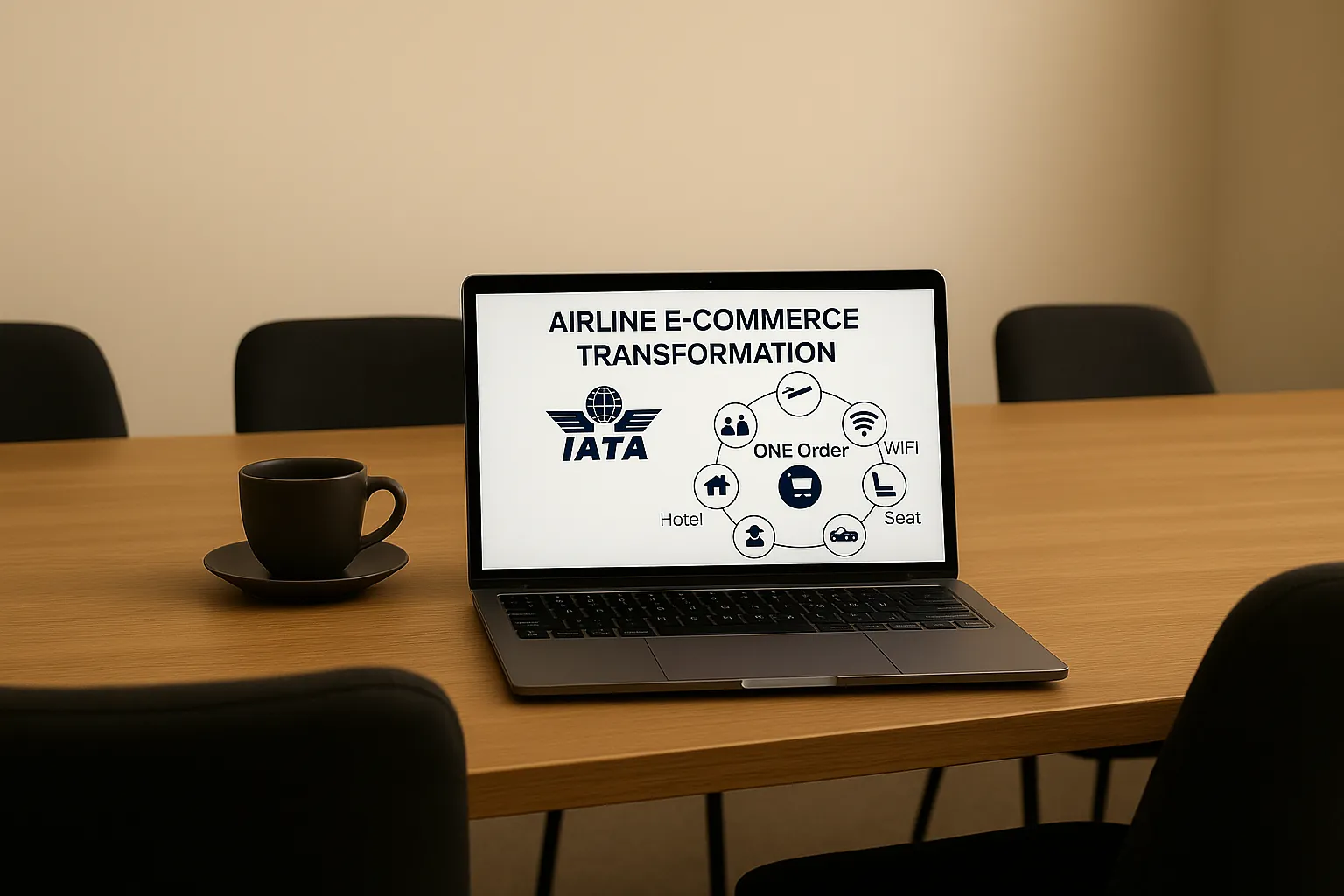
What is ONE Order?
ONE Order is IATA's initiative to modernize airline order management by replacing the traditional PNR + ticket + EMD model with a single, unified order record.
For e-commerce, ONE Order enables a more retail-like experience: flexible changes, transparent pricing, and streamlined post-booking management.
The transition isn't just a technology upgrade — it's a fundamental shift in how airlines think about customer orders.
Today, a single trip can be represented by a PNR for the flight, a separate e-ticket record, and one or more EMDs for ancillaries like bags or seats — three linked-but-distinct records that different systems have to keep in sync. ONE Order collapses these into one order object that carries the full commercial and fulfilment history of the purchase, closer to how a retailer's order management system treats a shopping cart.
Impact on direct channel e-commerce
ONE Order enables real-time order modification, transparent fare breakdowns, seamless refund processing, and integrated ancillary management.
Airlines that adopt early gain significant competitive advantage: faster checkout, easier changes, better customer service.
The transition requires careful planning. Legacy systems, GDS connectivity, and operational workflows all need to be adapted.
In practice, the biggest e-commerce impact shows up in post-booking self-service: today, a fare change or a seat swap often needs to touch the PNR, the e-ticket, and any related EMDs separately, which is why so many 'simple' changes still route to a call center. With a single order record, that same change becomes one write to one object, which is what actually makes real-time self-service change and refund flows viable on the website rather than only through an agent.
How to prepare without waiting for full rollout
Airlines don't need to wait for a complete ONE Order migration to start capturing e-commerce value. Auditing which post-booking changes currently require a call versus which could technically be self-served today reveals where the PNR/ticket/EMD split is the real blocker versus where the website simply hasn't built the flow yet. That audit alone usually uncovers self-service wins that don't depend on ONE Order at all — and it builds the operational muscle the airline will need once the order model does change underneath it.

Written by
Rodrigo Maroto
Founder of Consumer Services Hub. Consultant and strategist with 15+ years of experience in ecommerce, digital product management, and consumer services.
View LinkedIn profileGrow airline direct revenue
We audit booking funnels, ancillaries and retailing capabilities end to end.
Talk to usWhether you're launching a new digital channel, optimizing an existing one, or unlocking the next stage of growth — we're ready to help.
Related articles
The KPIs every airline ecommerce director should control
The dashboard should follow the sequence of demand, offer, order, fulfilment and customer value. A KPI earns its place on the dashboard only if it changes what the team decides to do next.
A complete guide to airline ecommerce strategy
An airline ecommerce strategy must connect offers, channels, order management, servicing and economics in one business model. Success shows up as higher direct-channel contribution and a distribution model the airline actually controls, not a longer list of initiatives.
Air cargo: the other half of an airline's ecommerce
The shipper buys capacity with the same impatience a passenger buys a seat, but with fewer tools to do it. An airline that digitised seat sales while still quoting cargo by email has half an ecommerce.