Air cargo: the other half of an airline's ecommerce
The shipper buys capacity with the same impatience a passenger buys a seat, but with fewer tools to do it. An airline that digitised seat sales while still quoting cargo by email has half an ecommerce.
Written for: Leaders in cargo, commercial, ecommerce, revenue and technology within airlines.
The shipper buys capacity with the same impatience a passenger buys a seat, but with fewer tools to do it.
Two businesses, one commercial discipline
In most airlines, passenger and cargo have evolved in parallel without ever meeting. Passenger has spent twenty years refining real-time availability, dynamic pricing, cross-selling and self-service. Cargo, with margins that are often comparable, still runs on email requests, rates negotiated outside the system and confirmations that arrive hours later.
The difference is not explained by product complexity. It is explained by nobody having treated cargo as a digital sales channel with the same rigour. Meanwhile, freight forwarders have started comparing airlines on platforms that do answer immediately.
Four capabilities that separate a digital cargo channel from a web form
Quoting with commitment
A price that cannot be booked is not a quote: it is an estimate. The real step change happens when the system returns a rate with associated capacity and a stated validity period. That requires connecting rate, availability and acceptance in a single response — precisely the problem passenger solved years ago.
Realistic availability, not theoretical
Sellable capacity on a cargo flight depends on weight, volume, commodity type, route restrictions and the space passenger operations may release or consume. Publishing availability without those constraints generates acceptances that later have to be reversed, and every reversal costs more credibility than the sale was worth.
Client-specific pricing without leaving the channel
Cargo lives on negotiated agreements. A digital channel that only shows public tariffs forces the best customers out of it, leaving the channel to lower-value traffic. Contracted terms must be reflected inside the channel, not handled as an exception by email.
Status and after-sales as part of the product
The shipper is not buying transport: they are buying certainty of arrival. Shipment tracking, proactive incident notification and a clear route to claim are worth as much as the rate. In practice, that is where repeat business is decided.
Implementation sequence
1. Measure the current response time. From forwarder request to a firm quote.
2. Build reliable availability before the interface. Without realistic capacity, the channel generates reversals.
3. Bring negotiated agreements in. Start with the customers concentrating the most volume.
4. Publish validity and conditions. Rate duration, restrictions and acceptance process.
5. Close the loop with status and claims. Proactive notification before the customer asks.
How to measure progress
Time to firm quote: median, not average.
Reversal rate: acceptances undone for lack of real capacity.
Agreement coverage in channel: negotiated volume manageable digitally.
Forwarder repeat rate: shippers returning the following quarter.
Contribution per kilo sold in channel: versus the same traffic handled outside it.
Common mistakes in cargo digitisation
Publishing a web form and calling it a digital channel.
Showing theoretical availability instead of sellable capacity.
Leaving negotiated agreements outside the system.
Measuring the channel by requests received rather than contribution.
A quick test: if a regular forwarder cannot obtain a binding rate for a standard shipment on their own in under a minute, the airline does not yet have a digital cargo channel.
Conclusion
Cargo is the part of the business where ecommerce discipline has not yet been applied and where, for that very reason, obvious gains remain. Quoting with commitment, real availability, contracted terms inside the channel and visible after-sales reproduce, in a B2B business, exactly what grew the passenger direct channel.
Consumer Services Hub helps airlines apply ecommerce and retailing capabilities to the cargo business and its B2B sales channels.
Consumer Services Hub - Strategic ecommerce consultancy for B2C service companies

Written by
Rodrigo Maroto
Founder of Consumer Services Hub. Consultant and strategist with 15+ years of experience in ecommerce, digital product management, and consumer services.
View LinkedIn profileGrow airline direct revenue
We audit booking funnels, ancillaries and retailing capabilities end to end.
Talk to usWhether you're launching a new digital channel, optimizing an existing one, or unlocking the next stage of growth — we're ready to help.
Related articles
The KPIs every airline ecommerce director should control
The dashboard should follow the sequence of demand, offer, order, fulfilment and customer value. A KPI earns its place on the dashboard only if it changes what the team decides to do next.
A complete guide to airline ecommerce strategy
An airline ecommerce strategy must connect offers, channels, order management, servicing and economics in one business model. Success shows up as higher direct-channel contribution and a distribution model the airline actually controls, not a longer list of initiatives.
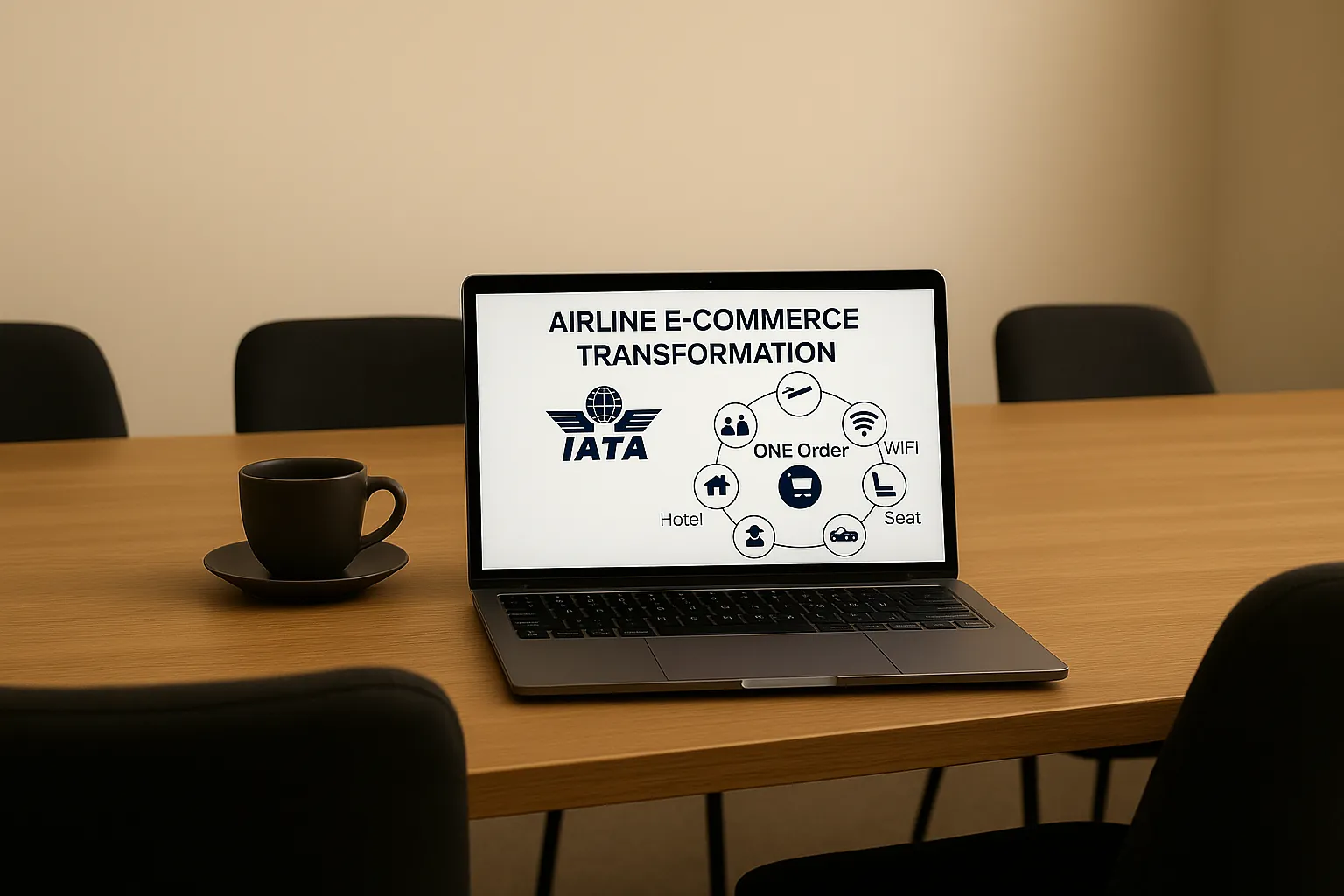
How ONE Order will impact airline ecommerce
ONE Order will change how airlines manage bookings, payments and service. Understanding its impact on ecommerce is critical before migration starts.